
THE DUST
1967: J.N. Roberts Got Lost in the Baja Night and Missed by 71 Minutes
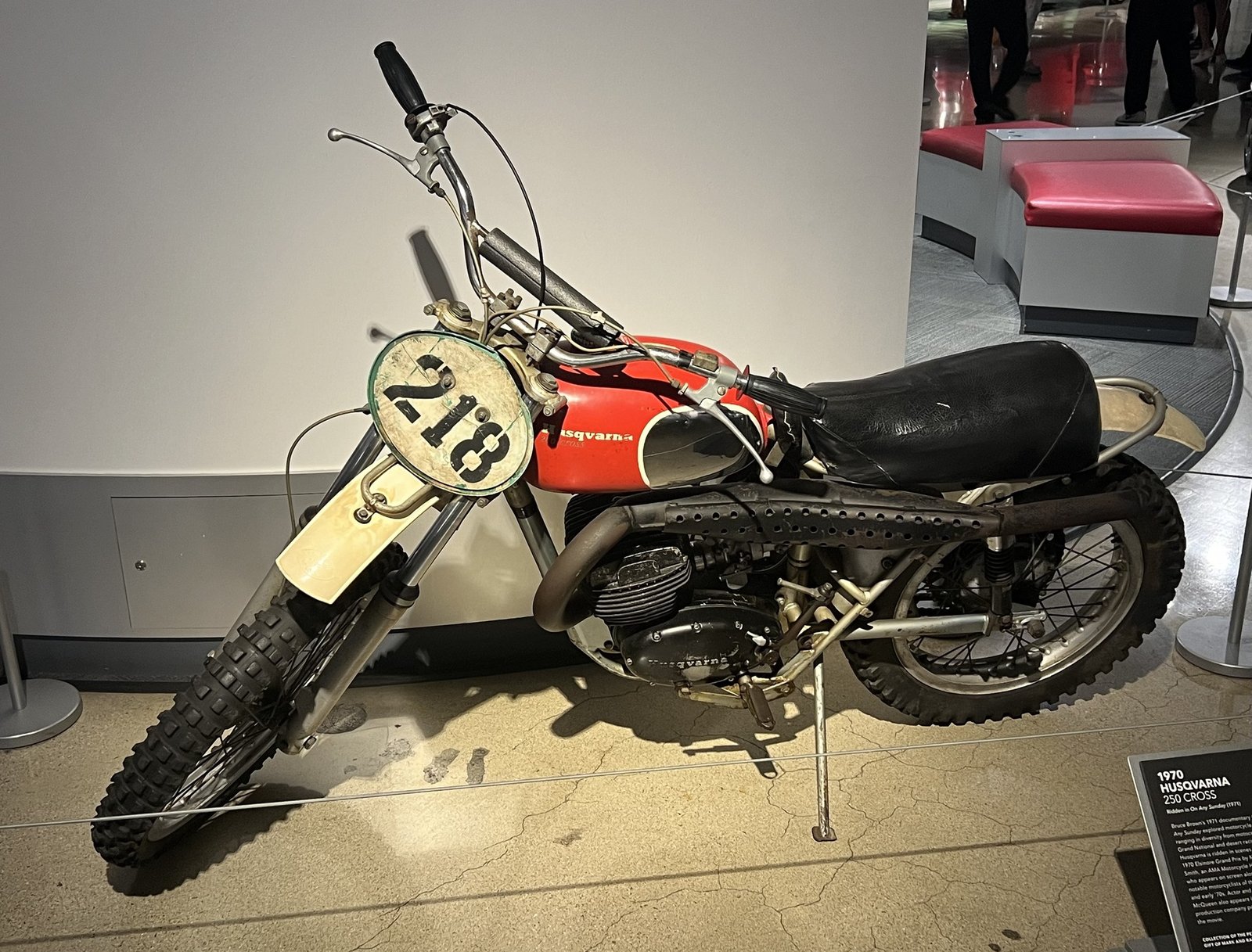
Malcolm Smith went past the Ensenada airport flat on the tank, the Husqvarna screaming, just as his teammate was climbing into an airplane.
Updated November 12, 2026
Malcolm Smith went past the Ensenada airport flat on the tank, the Husqvarna screaming, just as his teammate was climbing into an airplane.
J.N. Roberts watched him go. Roberts was flying south to El Arco, the halfway point of the first Mexican 1000, to take the bike for the second half. "Why am I getting on an airplane to fly 500 miles to the middle of nowhere when that bike's not going to make it 50 miles out of town?" he said.
It was 1967. Sixty-eight vehicles had left Tijuana at midnight for La Paz, most of the way down the Baja peninsula on rock, dust and sand. Cars, buggies and eleven motorcycles ran on the same clock. A lot of the four-wheel crowd at the start figured the motorcycles, with no navigators and no winches, would not finish at all.
Roberts, who died this August at 84, had paid $825 for his first Husqvarna and won a desert overall in his third race on it. He kept winning. Then the importer, Edison Dye, got in touch and asked if he wanted to ride Baja with Smith. Dye gave Smith a new 360 and agreed to pay his expenses if he won. Smith studied the Lower California guidebook before the start, and a friend drove south in a Volkswagen, leaving cans of gas along the route.
Roberts did not study the guidebook. He had never pre-run the course. "I never get lost," he said.
The bike went a lot farther than 50 miles. At the riders' meeting, the leader had been expected into El Arco around 6 in the morning. Smith got there about 5 the evening before. His leg from Ensenada took 9 hours, 47 minutes, and he handed Roberts the bike with more than two hours on the next competitor.
Then the sun went down. Roberts had ridden a couple of desert races with lights on his bike, just to feel the difference. The light on the Husqvarna was a 45-watt Lucas running off the magneto. "As soon as you dropped your rpm, you had no light," he said.
About 100 miles past El Arco, he was in the cow trails. He wound at least 30 miles off course, well beyond the old mission town of San Ignacio. He bummed gas in small villages and poured oil straight into the tank. At one corner he saw a cluster of little lights ahead, locked up the rear brake and killed the engine. He kicked it back to life, and the dim beam came up.
"I realized that I was in the middle of a doggone cow herd," Roberts said.
He asked for directions and got back on the course. Toward morning the fog rolled in, and he was so turned around he could not tell north from south, so he stopped and waited for it to lift. Somewhere in all of that, a two-man dune buggy got ahead of him.
Roberts rode into La Paz after a night that ran from dusk to dawn. The Husqvarna was the first motorcycle to finish. The buggy had beaten it by 71 minutes, 27 hours, 37 minutes to 28 hours, 48 minutes. He came in looking like he was frozen to the bike.
"Basically, I was," he said.
The next bike in was a Triumph. The motorcycles that made it after that came in broken and bent, some running on parts borrowed from other teams, and every rider was already talking about next year.
Thirty-six years later, at 61, Roberts lined up for the Baja 1000 again, on a team with his son, Jimmy, while the Dust to Glory cameras rolled. When the film came out, he skipped the premiere. He had a race that weekend.
True races. Still kicking.