
THE DUST
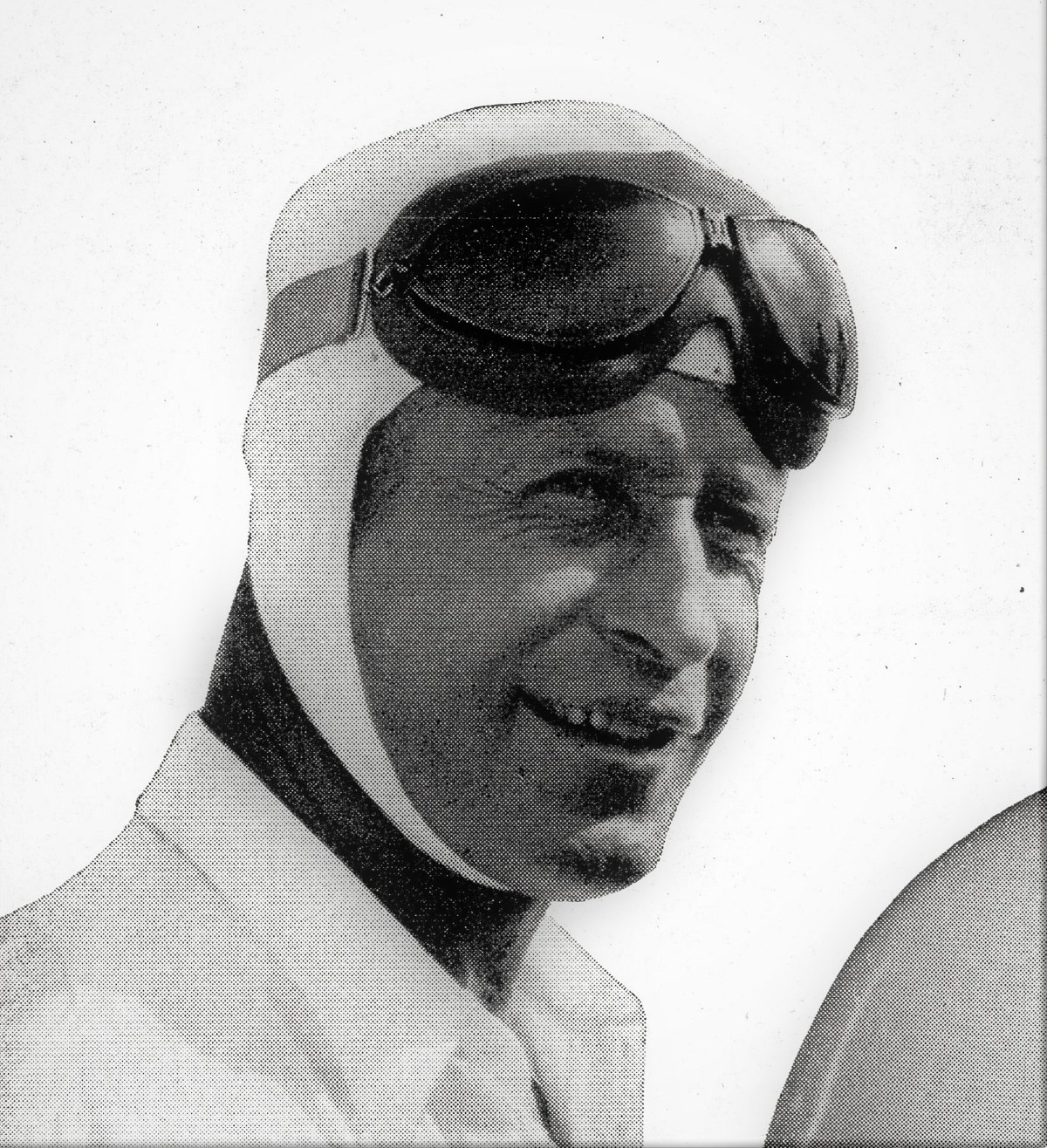
Ab Jenkins, 1935: Two Broken Engines, One Fire, and 24 Hours on the Bonneville Salt
In the summer of 1935 Ab Jenkins and Augie Duesenberg took a long tailed Duesenberg Special to the Bonneville Salt Flats to take back the 24 hour record. The car broke twice before it ever got to try a third time.
Updated October 30, 2026
Two engines broke before Ab Jenkins finally got his 24 hours.
It is the summer of 1935 on the Bonneville Salt Flats in western Utah. Jenkins is a Salt Lake City building contractor in his fifties who has spent years talking the world's speed men into coming out to his salt. This summer it has worked a little too well. Britain's John Cobb has already come out and taken Jenkins's endurance records, and Jenkins had moved aside on the flats to let him run.
Now Jenkins wants them back.
His car is the Duesenberg Special. Augie Duesenberg has been working on it since May 1934. Under the long hood sits a supercharged Duesenberg SJ engine with special cams and a pair of big carburetors, built to make about 400 horsepower. Herbert Newport has wrapped the chassis in a speedster body with a long tapered tail. The front axle is dropped to bring the nose down. Up front there is a single headlight, because half of a 24 hour run happens in the dark.
There is a second engine, too. Everyone knows a record car can break.
The first attempt goes after Cobb's marks one by one. The Special is beating every one of them when a bearing fails, about 300 miles in. The run is over.
Both engines are rushed back to the Duesenberg shop in Indianapolis. New bearings go in. The engines come back west to the salt, and the crew starts again.
The second attempt runs far longer. At 1,960 miles the crankcase splits.
That leaves one good engine and one more chance. They put it in.
Jenkins has a reputation for driving every mile himself. This time he accepts help. Tony Gulotta, an Indianapolis 500 driver and a friend, will take turns at the wheel.
The third attempt starts. The Special stops every 400 miles for fuel, tires, and a look over by the crew, then goes back out onto the circle. At some point a loose cable starts a fire in the cockpit. The car keeps going.
Lap after lap the white salt runs under the wheels. Night falls and the single headlight sweeps the course. The sun comes up and the car is still out there.
On August 31, 1935, the Duesenberg Special comes in with a new set of records. The biggest one: 3,253 miles in 24 hours, an average of 135.47 mph.
It does not last long. Days later Malcolm Campbell takes the outright land speed record on the same salt at more than 301 mph. Soon after that, George Eyston pushes the 24 hour record up to 140.52 mph.
Jenkins does what he always does. He comes back.
He buys the car. Augie Duesenberg puts a Curtiss Conqueror aircraft engine in it. A Salt Lake City newspaper runs a contest to give it a name, and the winner sticks: the Mormon Meteor. In 1936 the car returns to the salt and takes the 24 hour record again, then goes on for 48.
Later the old Special engine goes back in, the car gets doors and a top, and Jenkins and his son Marvin drive it around Utah on the road.
The car still exists. In 2007 it won Best of Show at Pebble Beach.
But the run that started it all needed three tries, two engines, a fire, and a friend to share the wheel.
True races. Still kicking.