
THE DUST
Indiana Snow Was So Deep the Thomas Flyer Took the Rails
In February 1908, the American car in the New York to Paris race hit Indiana in a snowstorm, got off the roads and onto the tracks, and kept going for another five months until it won in Paris.
Updated October 7, 2026
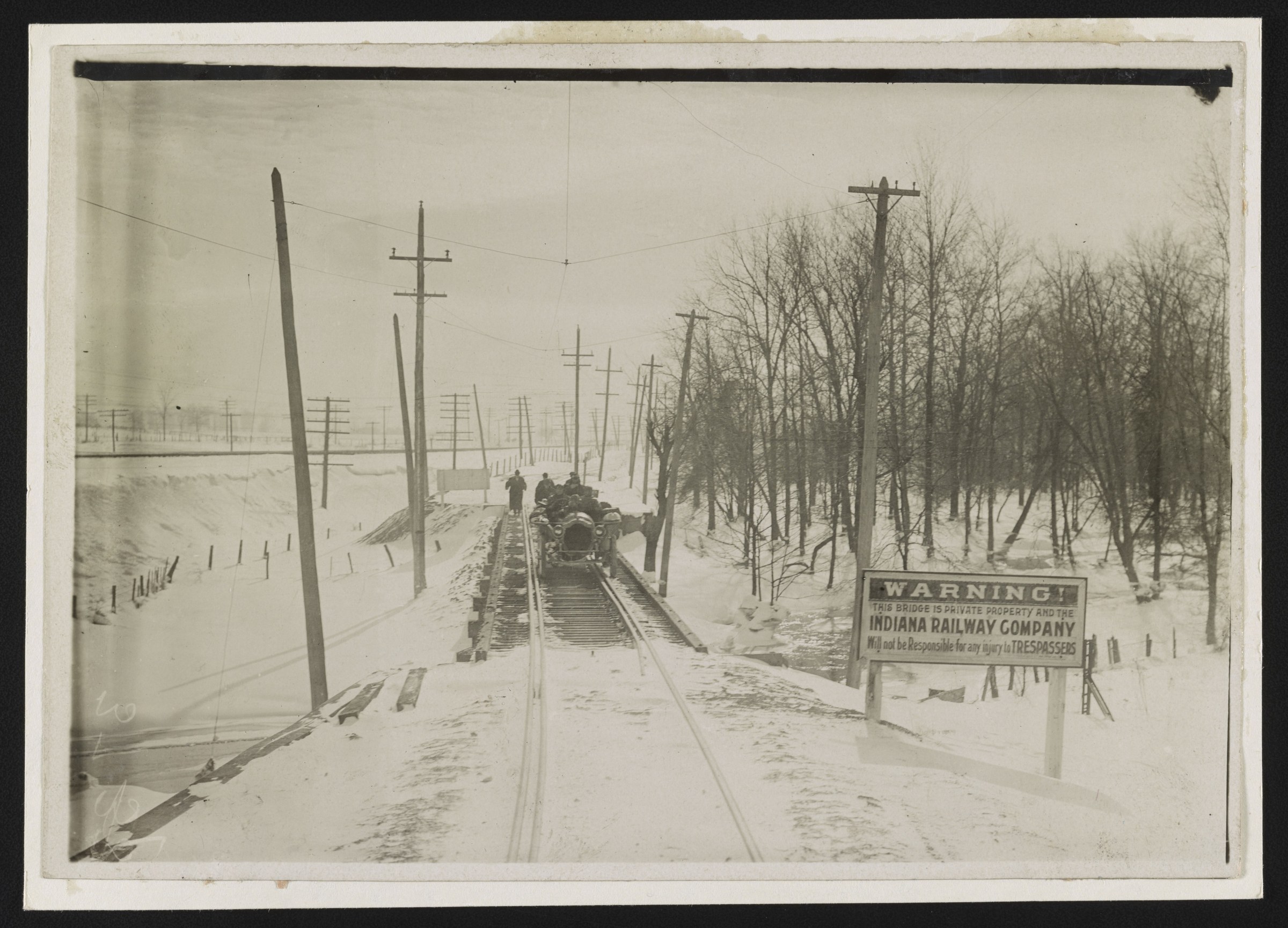
Indiana, February 1908. The snow is so deep that horses are pulling cars through the drifts.
One of those cars is the Thomas Flyer, built in Buffalo, New York, and racing from New York to Paris. It left Times Square on February 12 with five rivals from France, Germany and Italy. About 250,000 people turned out to watch them go.
Montague Roberts is driving. Riding with him is George Schuster, a mechanic from the Thomas factory.
In Indiana the roads all but disappear under the snow. Local people come out with horses and shovels to help dig the cars through.
So the crew puts the Flyer on the rails and drives it down the tracks, right across a railroad bridge. The other teams cry foul.
The Flyer keeps going. It crosses the country to San Francisco. The plan was to drive across Alaska, but Alaska in spring cannot be driven, so the race ships the cars across the Pacific instead. From there it is Siberia, then Europe. Schuster does the driving now.
On July 30, 1908, 169 days after the start, the Flyer rolls into Paris.
A German car, the Protos, got there four days earlier. But the Protos had ridden part of the way on a train, and the race's time penalties hand the win to the Americans.
The Thomas Flyer is still around. It sits in the National Automobile Museum in Reno, Nevada.
What is the worst winter stretch you ever got a vehicle through, and what got you out?
RELATED READING
- Nine Years Between Three and FourThe Dust
- Led Baja. Finished Fourth.The Dust
- Two Gears. Overall.The Dust